How Digital Experiences Can Make Physical Places Easier to Navigate

A digital experience makes a physical place easier to navigate when it does two things: conveys how it feels to be there, and shows how it works.
Take Pearl: Funkhaus designed and built a site for one of San Antonio’s most beloved destinations, to work as a front door to this growing district. Whether you’re building for a single venue or an entire neighborhood, here’s what to consider when bringing a place online.
Start on the ground
From our office in Los Angeles, Funkhaus’ first impression of Pearl came entirely from its existing website. So before designing anything, we took a trip. “With any client engagement, we start by becoming superfans ourselves,” says Funkhaus Managing Partner Nick Dies. “Once we become immersed in their world, we can translate what we find online.”
The feel of the Pearl, its level of finish, its tactility, its maker-driven care: we found that these standout qualities weren’t coming through online. Functionally, it was hard to tell where the district started and stopped, or how far one spot sat from another. The rest of the work was closing those two gaps.
Bring the feel online
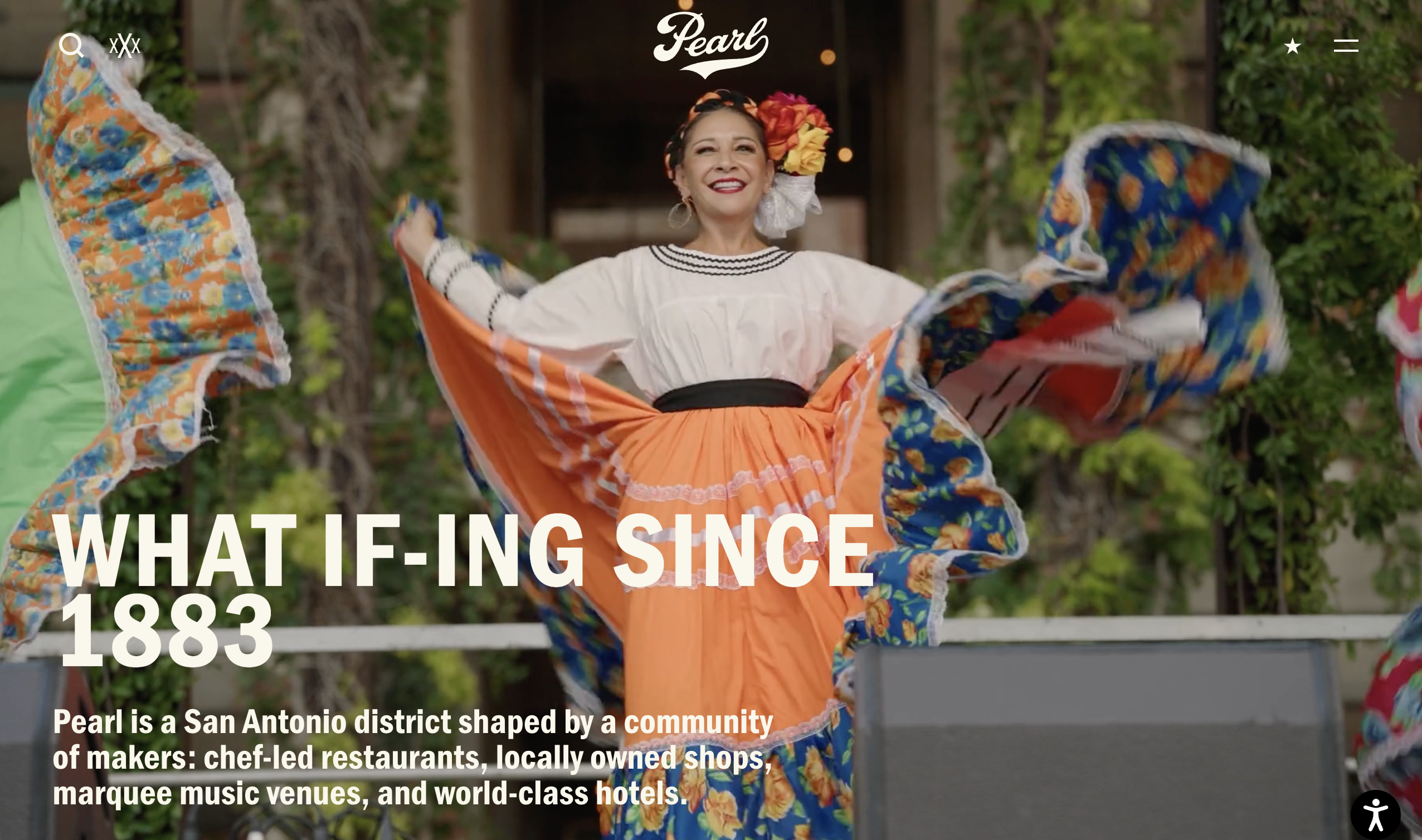
To bring a place’s feel online, start with design language. Look for the materials, textures, and details that define the space in person, and carry them into the site. For Pearl, that meant bringing a feel for the historic legacy of the location, as well as the attention to detail and the human stories.
From there, let content build the picture. Every piece of copy and media is a chance to tell the place’s story, from hero video to taglines to menu language. On Pearl’s homepage, a video captures the district’s happenings over time, so visitors get a sense of its rhythm before they arrive.
Understand what visitors need
Most destinations serve a wide range of visitors, and no single experience fits all of them. Map who comes, the pathways they take, and the language they use, then build content around each group. For Pearl, we curated an itinerary for each audience, turning a vast amount of information into a manageable plan.
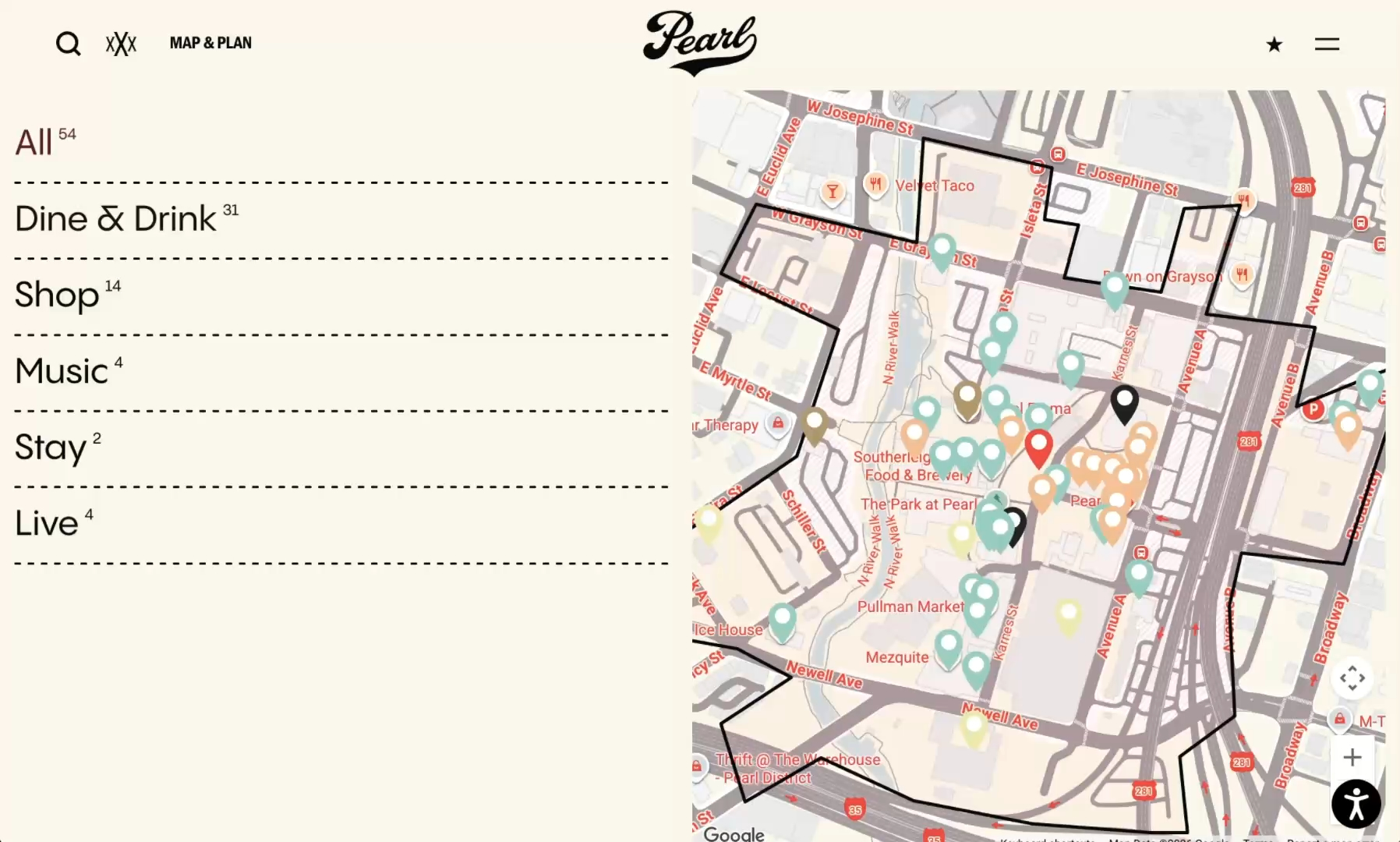
Wayfinding tools should follow two rules: call them what they are, and build them on what people already use. A map for planning should be called a map, not a proprietary feature with its own name. Pearl’s map is built on the Google Maps API and styled in Pearl’s palette, so it feels familiar from the first tap. Visitors can filter by offering to see where everything sits, and an outlined boundary shows where the district starts and stops, so they understand its multi-block footprint before they park.
Connect brands without erasing them
When a destination holds multiple brands, one name can’t cover everything. Each property needs to keep its own identity while still feeling related to the rest. Connect them through shared navigation, common design cues, and a design system they can all draw from.
At Pearl, properties like hotels each have their own personality and website. A shared dropdown banner will eventually link the sites, common design cues signal they belong together, and shared design systems let components power one another. Separate URLs, one ecosystem. It’s the same thinking behind our approach to multi-brand digital ecosystems.
A great destination website helps people picture themselves there: where they’ll go, what they’ll discover, and why they’ll come back. As the place grows, its digital presence should grow with it, connecting new openings, stories, and experiences into a recognizable whole. Done well, it becomes part of how a district builds its identity, welcomes people, and deepens its relationship with the community around it.
FAQs
Does a destination website need a custom-built map? Not always. A well-styled Google map with clear filters often beats a bespoke one, because visitors already know how to use it.
Should a multi-brand destination have one website or several? It depends on how distinct the brands are. When each has its own personality, separate sites connected by shared navigation and design cues protect that individuality.
What makes hospitality website design different from a standard business site? It has to sell an experience and support a visit. Brand, logistics, and on-site utility all live in one place.